The Warmest Welcome in Pennsylvania
Imagine never having to shovel snow, never paying a heating bill, and having the warmest basement in the county. For the residents of Centralia, Pennsylvania, this wasn't a dream—it was daily life from 1962 to the early 2000s. The catch? Their entire town was sitting on top of a coal fire that had been burning underground for over half a century.
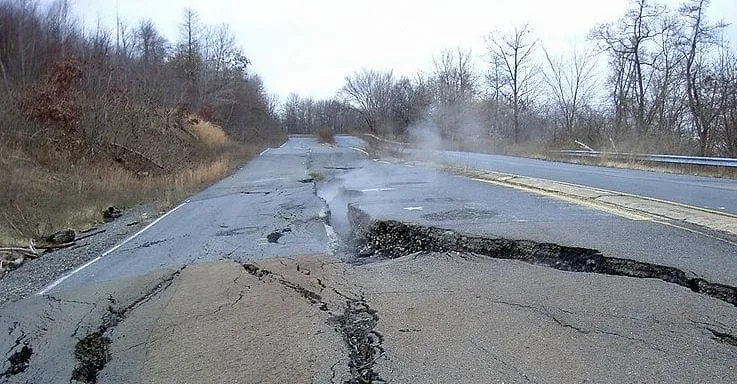 Photo: Centralia, Pennsylvania, via etzq49yfnmd.exactdn.com
What started as a routine trash burning in an abandoned strip mine became America's longest-running environmental disaster. But for decades, nobody seemed particularly upset about it.
How to Accidentally Set a Mountain on Fire
The story begins in May 1962, when Centralia's volunteer fire department was hired to clean up the town dump before Memorial Day. The dump sat in an abandoned strip mine pit, and the easiest way to clear it was the way they'd always done it—set it on fire and let it burn down to manageable ash.
What they didn't know was that the dump sat directly on top of an exposed coal seam. When the trash fire burned down through the soil, it found an underground buffet of coal that stretched for miles beneath the town. Coal fires are notoriously difficult to extinguish because they burn at extremely high temperatures and can spread through underground seams faster than anyone can dig them out.
By the time officials realized what was happening, the fire had already spread beyond any reasonable hope of containment. The estimated cost of extinguishing it completely? About $663 million in 1982 dollars.
The Perks of Living Over an Inferno
Here's where the story gets strange: many residents didn't want the fire put out. Why would they? It was the best thing that had ever happened to their heating bills.
Basements stayed a comfortable 70 degrees year-round without any furnace. Sidewalks never iced over because the ground beneath them was warm. Gardens extended their growing seasons well into winter. Some enterprising residents even used the naturally heated ground to grow tropical plants that had no business surviving a Pennsylvania winter.
Local businesses started advertising "Centralia's Natural Heating" as a tourist attraction. Visitors came from hundreds of miles away to see steam venting from cracks in the ground and to feel the warm earth beneath their feet.
When Convenience Becomes Catastrophic
For twenty years, Centralia residents lived with their underground fire like it was a helpful neighbor. Sure, there was the occasional crack in the ground venting smoke, and yes, sometimes the air smelled a bit sulfurous, but those seemed like small prices to pay for free heating.
The illusion of normalcy shattered in 1981 when twelve-year-old Todd Domboski was walking in his grandmother's backyard and suddenly fell into a sinkhole that opened beneath his feet. The hole was four feet wide, 150 feet deep, and filled with carbon monoxide from the coal fire below. If his cousin hadn't been nearby to pull him out, he would have died within minutes.
Suddenly, the convenient fire didn't seem so convenient anymore.
The Slow-Motion Evacuation
Even after the Domboski incident, convincing residents to leave wasn't easy. The government offered to relocate families, but many refused to go. They'd lived with the fire for two decades—why leave now?
It took another decade of gradually worsening conditions before most residents accepted that their town was no longer safe. Carbon monoxide levels in some homes reached dangerous levels. Ground temperatures in some areas exceeded 900 degrees Fahrenheit. Trees began dying as the fire burned away their root systems.
By the early 1990s, most of Centralia's 1,000 residents had accepted government buyouts and relocated. The few who remained became increasingly isolated as the post office stopped delivering mail, the town lost its ZIP code, and most buildings were demolished to prevent people from moving back.
The Fire That Refuses to Die
Today, the Centralia mine fire is still burning. Geologists estimate it has enough coal to feed on for another 250 years. The underground inferno now covers about 400 acres and continues to spread slowly through the coal seams beneath the mountains.
A handful of residents still live in Centralia, despite having no municipal services and being surrounded by warning signs about toxic gases. They've become something of a tourist attraction themselves—the last holdouts of a town that refused to admit it was uninhabitable.
The Lesson Hidden in the Smoke
The story of Centralia reveals something unsettling about human nature: our remarkable ability to normalize the abnormal when it's convenient. For twenty years, an entire community convinced itself that living on top of a massive underground fire was perfectly reasonable because it saved money on heating bills.
It's a perfect example of how disasters don't always announce themselves with dramatic explosions or sudden catastrophes. Sometimes they arrive quietly, offering benefits that make us overlook the dangers. Sometimes the most dangerous situations are the ones that feel comfortable.
Centralia's residents weren't stupid or reckless—they were human. They adapted to their circumstances so gradually that they stopped noticing how extraordinary those circumstances had become. In a way, they were victims of their own adaptability.
The town that loved its underground fire too much became a cautionary tale about the difference between living with danger and living safely. Sometimes the warmest welcome is the one you should run away from.