The Social Event of the Season
Picture this: It's a gorgeous Sunday morning in July 1861, and Washington D.C.'s high society is planning the ultimate tailgate party. The occasion? The Union Army's march to Manassas, Virginia, to put down what everyone assumed would be a brief, almost comical rebellion.
 Photo: Washington D.C., via jooinn.com
 Photo: Manassas, Virginia, via thumbs.dreamstime.com
Senators packed champagne. Congressmen brought opera glasses. Society ladies wore their finest summer dresses and carried parasols to shield themselves from the sun while watching American democracy reassert itself through superior firepower.
The atmosphere was so festive that vendors set up along the roads selling lemonade and sandwiches to spectators heading out to watch the "show." Newspapers advertised the battle like a sporting event, with the Washington Star promising "a decisive engagement that will restore the Union before supper."
Nobody — absolutely nobody — expected to witness the birth of modern warfare.
The Carriage Convoy to History
On the morning of July 21st, a bizarre procession left Washington D.C. for the 30-mile journey to Manassas Junction. Military supply wagons rolled alongside elegant carriages filled with civilians dressed for a garden party. Congressmen rode next to newspaper correspondents, while socialites shared gossip with foreign diplomats eager to see American military efficiency in action.
Senator Benjamin Wade of Ohio brought his wife and a wicker basket packed with cold chicken and wine. Representative Alfred Ely of New York carried a notebook to record what he assumed would be historic quotes from Union officers accepting Confederate surrender.
The mood was so casual that when the convoy reached Centreville, about six miles from the actual battlefield, families spread blankets on hillsides like they were settling in for a Fourth of July fireworks display.
Front Row Seats to Reality
The first few hours seemed to confirm everyone's expectations. Through their opera glasses and field telescopes, the spectators watched Union forces advance in neat formations while Confederate lines appeared to fall back in disorder. Cheers went up from the hillside whenever Union artillery found its mark.
"It was like watching a grand parade," wrote socialite Virginia Clay in her diary. "The uniforms were so bright, the formations so precise. It hardly seemed real."
Senator Henry Wilson of Massachusetts was so confident in Union victory that he began drafting a victory telegram to send back to Washington. Several congressmen discussed whether they should ride down to congratulate General Irvin McDowell personally or wait for him to come accept their praise.
But around 2 PM, something shifted on the battlefield that the picnickers couldn't quite understand.
When Entertainment Became Terror
The turning point came when Confederate reinforcements arrived by railroad — the first time in military history that troops were moved by train during an active battle. Suddenly, the "retreating" Confederate forces stopped retreating and began advancing with a fury that shocked everyone watching.
The neat Union formations that had looked so impressive from a distance began to crumble. What had been an orderly advance became a chaotic retreat, with Union soldiers running directly toward the hills where Washington's elite sat with their picnic baskets.
"The entertainment became a nightmare in the space of minutes," wrote journalist William Russell of the London Times. "Ladies who had been applauding through opera glasses were suddenly screaming as cannon balls whistled over their heads."
Representative Ely, who had been taking notes for posterity, found himself taking cover behind a carriage as Confederate cavalry charged up the very hill where he'd been sitting.
The Great Washington Stampede
What happened next was pure chaos. Hundreds of civilians who had never heard a shot fired in anger suddenly found themselves in the middle of a military rout. Elegant carriages became escape vehicles as panicked spectators fought to flee alongside retreating Union soldiers.
Senator Wade abandoned his picnic basket and commandeered a supply wagon. Congressman Daniel Sickles threw his wife into their carriage and whipped the horses into a gallop that didn't stop until they reached the Capitol steps.
The retreat became a traffic jam of epic proportions. Military wagons, civilian carriages, and fleeing soldiers created a 30-mile backup on the road to Washington. Some spectators abandoned their vehicles entirely and walked back to the city, arriving bedraggled and traumatized.
Reality Check for a Nation
The Battle of Bull Run (as it came to be known) lasted only a few hours, but it shattered every assumption Americans had about the conflict ahead. The Union Army's defeat was shocking enough, but the sight of senators and congressmen fleeing in terror alongside broken soldiers drove home a harsh truth: this wasn't going to be a quick, civilized affair.
Representative Ely didn't make it back to Washington at all — he was captured by Confederate forces and spent several months in prison, becoming the war's most embarrassed POW.
The newspapers that had promoted the battle as entertainment were forced to print very different headlines the next morning. The Washington Star's Monday edition read simply: "We Were Wrong About Everything."
The Picnic That Changed Everything
The spectacle at Bull Run became a national embarrassment that sobered both the government and the public. Congress immediately banned civilians from future battlefields, and the military began treating war correspondents with new suspicion.
More importantly, the disaster forced Americans to confront the reality that their civil war would be neither brief nor bloodless. The sight of their elected representatives running for their lives alongside broken soldiers made it impossible to maintain any romantic notions about the conflict ahead.
President Lincoln, who had spent July 21st pacing the White House awaiting victory telegrams, reportedly said: "Perhaps it's best that Congress saw what war actually looks like. Now they'll stop asking me when it will be over."
Today, a small monument at Manassas National Battlefield marks the spot where civilians watched the battle. The inscription reads: "Here democracy learned that war is not a spectator sport."
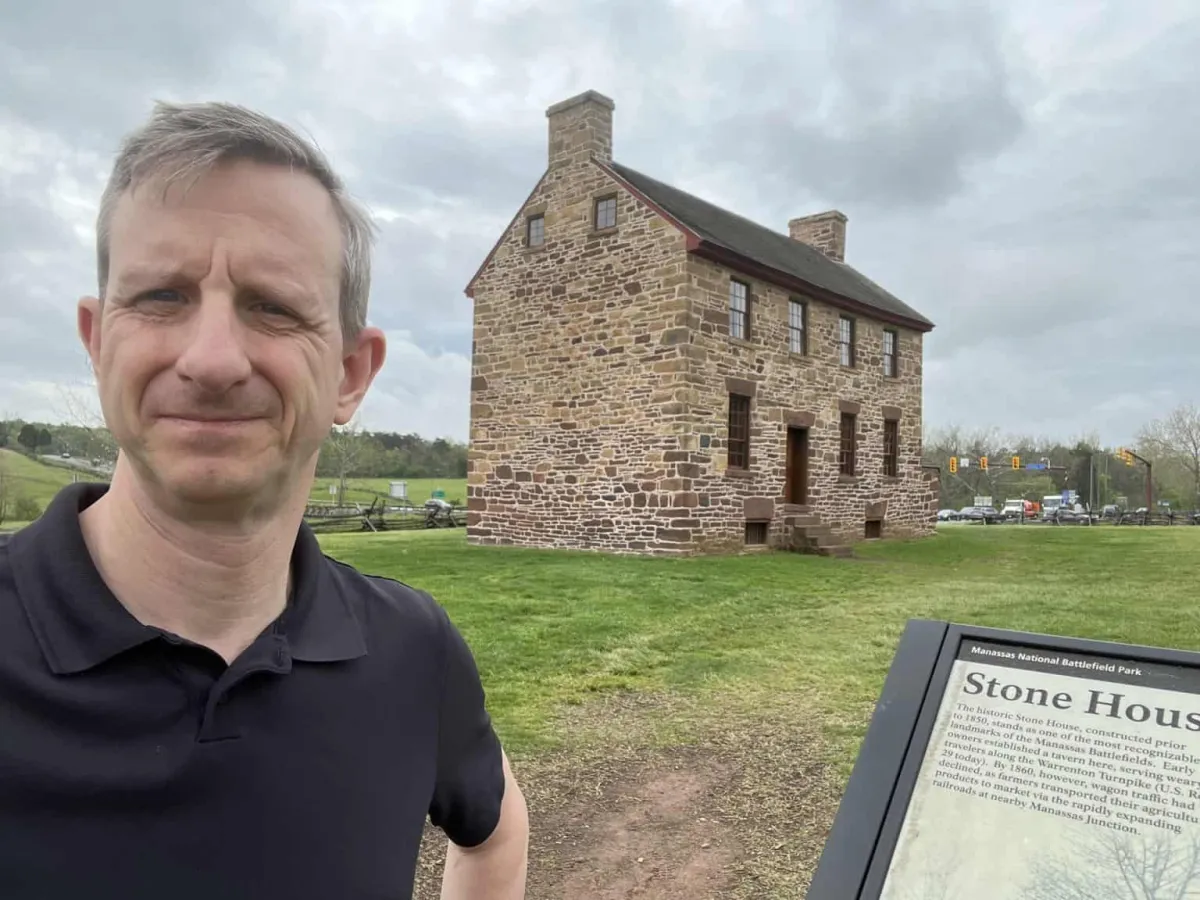 Photo: Manassas National Battlefield, via roamingmonk.com
It's a lesson that took a picnic basket full of champagne and a very long, very frightening carriage ride home to teach.