The Chocolate Bar That Revolutionized Every Kitchen in America
The Sweet Accident That Changed Everything
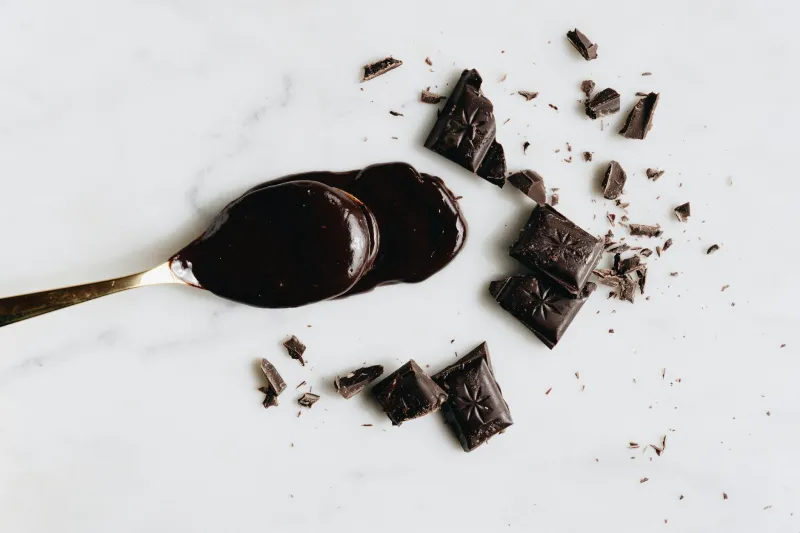
Picture this: you're a brilliant engineer working on top-secret military radar technology in 1945. You're standing next to a powerful magnetron—a device that generates microwave radiation for radar systems. Suddenly, you notice something weird. The chocolate bar in your pocket has turned into a gooey mess. Most people would curse, throw away the candy, and move on with their day.
Percy Spencer wasn't most people.
Instead of dismissing this sticky situation, Spencer had one of those lightbulb moments that literally changed the world. He realized that the microwaves from the radar equipment had somehow cooked his chocolate. And that realization would eventually put a revolutionary appliance in nearly every American kitchen.
From Radar to Recipes
Spencer, a self-taught engineer working for Raytheon, had already established himself as something of a technical wizard. With over 300 patents to his name, he had a knack for seeing possibilities where others saw problems. But even he couldn't have predicted that a melted Hershey's bar would launch a billion-dollar industry.
After the chocolate incident, Spencer's curiosity kicked into overdrive. He decided to test his theory with popcorn kernels, placing them near the magnetron. Within minutes, the kernels exploded into fluffy popcorn—the world's first microwave popcorn, though nobody called it that yet.
Next came the egg experiment. Spencer placed a raw egg near the radar equipment, and it cooked so quickly and violently that it exploded all over a colleague's face. The message was clear: these microwaves could cook food incredibly fast.
The Birth of a Kitchen Revolution
What happened next sounds like something from a mad scientist's laboratory. Spencer and his team at Raytheon began building a metal box to contain the microwave energy. They fed microwave power into this enclosed space and discovered they could cook food placed inside it.
The first microwave oven, called the "Radarange," debuted in 1947. But calling it a kitchen appliance would be generous. This beast stood nearly six feet tall, weighed 750 pounds, and cost $5,000—equivalent to about $60,000 today. It was less "convenient cooking" and more "industrial food processor."
Restaurants, ocean liners, and railroads were among the first customers. The idea of having one in your home seemed as ridiculous as parking a commercial jet in your driveway.
From Laboratory Curiosity to American Staple
The transformation from industrial cooking monster to household essential took decades. In 1967, Raytheon introduced the first countertop microwave oven, the Amana Radarange. At $495 (about $4,000 in today's money), it was still expensive, but at least it fit on a kitchen counter.
Americans remained skeptical. The whole concept seemed too weird, too futuristic. Cooking food with invisible rays? It sounded like something from a science fiction movie, not a legitimate cooking method.
But convenience eventually won over skepticism. As prices dropped and more manufacturers entered the market, microwave ovens began appearing in American homes. By 1976, microwave sales exceeded gas range sales for the first time. Today, over 90% of American households own a microwave oven.
The Accidental Genius
What makes Spencer's discovery so remarkable isn't just its impact—it's how completely accidental it was. He wasn't trying to revolutionize cooking. He wasn't even thinking about food. He was focused on improving radar technology for military applications.
The chocolate bar incident represents one of those perfect storms of curiosity, knowledge, and timing. Spencer had the technical background to understand what had happened, the curiosity to investigate further, and the resources at Raytheon to develop the discovery into a practical application.
The Ripple Effects of Melted Chocolate
Spencer's accidental discovery didn't just create a new appliance—it fundamentally changed how Americans eat. Microwave cooking enabled the explosion of convenience foods, from frozen dinners to microwave popcorn to hot pockets. It made possible the grab-and-go food culture that defines modern American eating habits.
The microwave also democratized quick cooking. Before Spencer's discovery, fast food preparation required either expensive restaurant equipment or significant cooking skills. The microwave put restaurant-speed cooking in every home.
The Man Behind the Melt
Spencer never saw significant personal wealth from his discovery, though Raytheon rewarded him with a $2 bonus for the patent. He continued working as an engineer until his death in 1970, accumulating patents and solving technical problems with the same curiosity that led him to investigate a melted chocolate bar.
Today, Spencer's accidental invention generates billions in revenue annually. Microwave oven sales, microwave-safe containers, microwave foods, and related industries all trace back to that moment in 1945 when an engineer noticed his pocket felt stickier than usual.
The Ultimate Kitchen Accident
In a world where most revolutionary inventions come from years of deliberate research and development, Spencer's story stands out. One moment of curiosity about a melted candy bar led to a technology that now sits in virtually every American kitchen.
It's a reminder that sometimes the most world-changing discoveries happen not in boardrooms or research labs, but in the pockets of curious people who notice when something unusual happens—and decide to figure out why.