The Ship They Couldn't Sink
Some ships are remembered for their tragic sinking. The Australasian earned infamy for the exact opposite reason — nobody could make it stop floating long enough to contain the medieval plague it was spreading across three continents.
On March 15, 1900, the steamship departed San Francisco's Pier 14 with 847 passengers bound for Sydney, Australia. What the port authorities didn't know — or chose to ignore — was that at least 23 passengers were already showing early symptoms of bubonic plague, the same disease that had killed one-third of Europe in the 14th century.
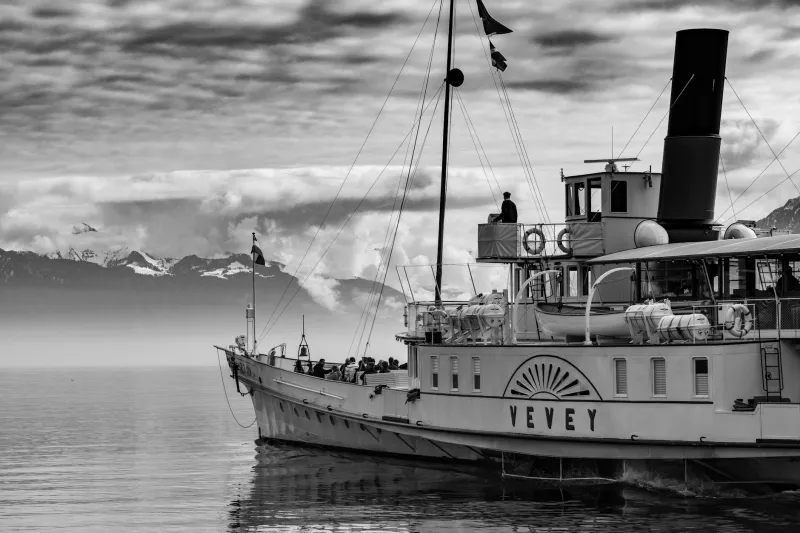
 Photo: San Francisco, via www.bdlaw.com
What followed was a decade-long game of international hot potato, as the Australasian became a floating biological weapon that no country wanted to claim responsibility for stopping.
The Inspection That Wasn't
Dr. Joseph Kinyoun, chief quarantine officer for San Francisco, had been tracking plague cases in the city's Chinatown for months. He knew an outbreak was brewing, but commercial pressure from the Pacific Mail Steamship Company — and explicit orders from Washington to avoid "economic panic" — forced him to conduct the most cursory inspection in maritime history.
Kinyoun's official report, discovered in 1987, reveals the impossible position he faced: "I observed several passengers displaying symptoms consistent with early-stage plague infection. However, given the commercial importance of maintaining regular Pacific service and the lack of definitive laboratory confirmation, I have cleared the vessel for departure."
In plain English: he saw people dying of plague and let the ship leave anyway because stopping it would hurt business.
The Australasian's captain, William Morrison, later testified that he was explicitly told by company officials to "maintain schedule regardless of passenger health concerns" and that any delays would result in his immediate dismissal.
Patient Zero Goes Global
The ship's passenger manifest, preserved in Australian National Archives, tells a chilling story. By day three of the voyage, the ship's doctor, James Patterson, was treating what he described as "severe fever and swollen lymph nodes" in passengers from multiple cabins.
By day seven, Patterson was performing burial services. The ship's log records 11 deaths during the 21-day voyage to Sydney, all attributed to "sudden tropical fever." Modern epidemiologists who studied the records in 1995 confirmed that the symptoms perfectly matched bubonic plague.
When the Australasian reached Sydney Harbor on April 5th, Australian health officials faced the same impossible choice their American counterparts had ducked: quarantine a major commercial vessel and trigger international trade disruptions, or look the other way and hope for the best.
They chose option three: let the ship dock, but only long enough to refuel and take on supplies. No passengers could disembark, but crew members were allowed shore leave "for essential provisioning."
The Floating Laboratory of Death
What happened next defied every principle of public health. Instead of quarantining the Australasian, three different governments — the United States, Australia, and Britain — quietly conspired to keep it moving.
The ship became a floating laboratory of plague transmission. Every port it visited recorded mysterious outbreaks of "tropical fever" within weeks of its departure. Hong Kong, Manila, Singapore, Bombay — the Australasian's route could be traced by following the trail of plague cases it left behind.
Dr. Ronald Ross, the British epidemiologist who later won the Nobel Prize for his work on malaria, was assigned to investigate the "unusual coincidence" of plague outbreaks following the ship's route. His classified 1902 report to the British Colonial Office was blunt: "The vessel Australasian has become a floating reservoir of plague bacilli, maintained by continuous reinfection among passengers and crew. It should be destroyed immediately."
Instead, the ship kept sailing.
The Economics of Denial
Why didn't anyone stop the Australasian? The answer lies in a web of commercial interests that valued trade routes over human lives. The Pacific Mail Steamship Company had invested millions in establishing regular service between San Francisco and Australia. Any disruption would benefit their German and British competitors.
More cynically, the ship had become a convenient way for multiple governments to export their plague problems. San Francisco health officials quietly encouraged infected Chinese immigrants to book passage on the Australasian. Australian authorities did the same with Aboriginal populations. British colonial administrators in Hong Kong used the ship to remove "undesirable elements" from the colony.
A 1903 cable from the U.S. State Department to the British Foreign Office, declassified in 1975, reveals the cold calculation behind the policy: "The vessel continues to provide a useful mechanism for managing surplus populations while maintaining plausible deniability regarding any resulting health consequences."
The Trail of Bodies
By 1905, epidemiologists had connected plague outbreaks in 17 different ports to the Australasian's route. Conservative estimates suggest the ship was responsible for at least 3,000 deaths across three continents, though the real number was probably much higher.
The most devastating outbreak occurred in Bombay in 1903, where the ship's three-day stopover triggered an epidemic that killed an estimated 1,200 people. British colonial records show that officials knew the Australasian was the source of the outbreak but allowed it to continue to Calcutta rather than deal with the diplomatic complications of detaining an American vessel.
Dr. Waldemar Haffkine, who developed the first plague vaccine, wrote in his journal: "The Australasian has become plague personified — a ship that exists solely to spread death, kept alive by the very governments that should destroy it."
The End of the Death Ship
The Australasian's reign of terror finally ended in 1910, but not because anyone found the courage to stop it. The ship simply became too notorious to ignore after a investigative series by the San Francisco Chronicle exposed the decade-long cover-up.
Public outrage forced the Pacific Mail Steamship Company to quietly retire the vessel. Rather than scrapping it immediately, they sold it to a British firm that converted it into a cargo hauler — without passengers, the plague transmission cycle was finally broken.
The ship was eventually scrapped in Liverpool in 1912, its steel plates melted down and recycled into new vessels. Ironically, some of that steel was used in the construction of hospital ships during World War I.
The Cover-Up That Lasted a Century
The full story of the Australasian remained classified until 1987, when Australian historian Margaret Preston discovered the ship's complete records in a misfiled archive box. Her research revealed that all three governments involved had actively suppressed information about the ship's role in spreading plague.
The U.S. Public Health Service didn't acknowledge the connection between the Australasian and Pacific plague outbreaks until 1995. British and Australian authorities have never officially commented on their role in allowing the ship to continue operating.
Today, the Australasian is studied in medical schools as a perfect example of how commercial interests can override public health. Dr. Anthony Fauci, in his 2018 textbook on infectious disease, wrote: "The Australasian represents the logical endpoint of prioritizing economic concerns over epidemiological reality — a floating biological weapon that governments created through willful neglect."
It's a sobering reminder that sometimes the most dangerous diseases aren't spread by accident, but by the deliberate decision to look the other way when stopping them becomes inconvenient.