The Battlefield That Broke All the Rules
Picture this: you're an American soldier in the trenches of World War I, and you've just performed an act of such incredible bravery that the enemy—the actual enemy trying to kill you—stops shooting long enough to salute your courage. Then they write a formal letter of commendation. About you. To your commanding officers.
This sounds like the setup to a war movie nobody would believe, but it actually happened to Private First Class Henry Johnson of the 369th Infantry Regiment in 1918. And the really weird part? The German military brass recognized his heroism months before the U.S. Army got around to it.
The Night Everything Went Sideways
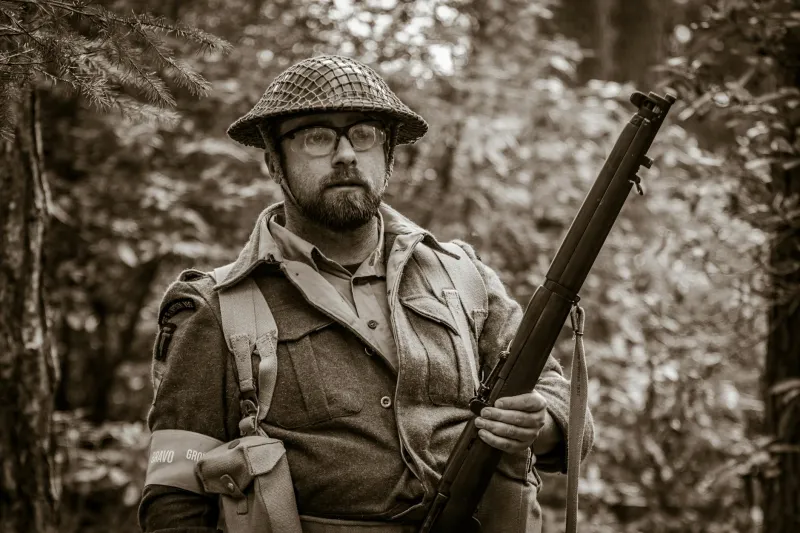
On May 15, 1918, Johnson and Private Needham Roberts were on sentry duty in the Argonne Forest when a German raiding party of about twenty soldiers attempted to capture them for interrogation. What happened next defied every manual on warfare.
Johnson, despite being severely wounded by grenades and rifle fire, single-handedly fought off the entire raiding party using his rifle, his bolo knife, and when those failed, his bare hands and whatever he could grab. He saved Roberts from being dragged away as a prisoner, killed multiple German soldiers, and wounded several others before the raiding party finally retreated.
The action lasted less than an hour, but it was so fierce and so tactically brilliant that German officers who reviewed the aftermath reports were genuinely impressed.
The Letter That Made Everyone Uncomfortable
Here's where things get truly bizarre. Three weeks after the incident, a German officer approached American lines under a white flag. He carried a sealed letter addressed to "The Commanding Officer of the Colored American Regiment, Sector 4."
The letter, written in formal military German and later translated, praised Johnson's "exceptional valor in combat" and noted that his "tactical skill and personal courage" had earned the "professional respect of the Imperial German Army." The letter specifically commended Johnson's "honor in battle" and suggested that "such a soldier brings credit to any uniform."
American officers had no idea what to do with this. There was literally no protocol for receiving fan mail from the enemy about your own troops.
The Bureaucratic Nightmare Nobody Wanted
The German commendation created a diplomatic and military mess that nobody in the American command structure wanted to touch. Acknowledging the letter meant acknowledging that German officers had better intelligence about American heroics than American officers did.
Worse, Johnson was part of the 369th Infantry Regiment, one of several African American units that were fighting under French command because the U.S. military's segregation policies meant they couldn't serve alongside white American troops. The idea that a Black American soldier was being praised by the enemy while being ignored by his own country's military was politically explosive.
So the letter was quietly filed away, and Johnson's heroics were officially forgotten.
The French Weren't Stupid
While American military bureaucrats were having an identity crisis, the French military had no such hang-ups. They awarded Johnson the Croix de Guerre, France's highest military honor, making him one of the first Americans to receive the decoration.
The French citation was straightforward: Johnson had demonstrated "extraordinary heroism" and "saved his comrade's life through personal sacrifice." No diplomatic dancing, no bureaucratic hand-wringing, just recognition for what actually happened.
Meanwhile, the German letter sat in a filing cabinet in Washington, D.C., gathering dust.
The Recognition That Came Too Late
Johnson finally received American recognition for his heroics, but not until 1996—seventy-eight years after the battle and fifty-seven years after his death. President Bill Clinton posthumously awarded him the Purple Heart, and in 2015, President Barack Obama awarded him the Medal of Honor.
By then, the German letter praising Johnson's courage had become a historical curiosity, a reminder of how bizarre warfare can become when professional soldiers recognize professional soldiering, regardless of which flag they're fighting under.
The Unintended Consequences of Enemy Respect
The German commendation letter revealed something uncomfortable about American military culture in 1918: enemy officers were more willing to acknowledge African American heroism than American officers were. This wasn't because German military culture was more enlightened—it wasn't—but because German officers were evaluating Johnson purely as a tactical threat who had outfought their best troops.
The letter also created an awkward precedent. If enemy armies started formally recognizing American heroics, what did that say about American recognition systems? The whole thing was easier to ignore than to address.
Why This Story Disappeared
For decades, the Johnson incident was buried in military archives, partly because it raised questions nobody wanted to answer. How do you explain that your enemy had better intelligence about your own heroes than you did? How do you acknowledge that foreign armies—both enemy and allied—were quicker to recognize American valor than America was?
The story only resurfaced in the 1990s when military historians began digging through World War I archives and discovered the German letter, still in its original envelope, still unacknowledged by American military leadership.
Sometimes the most extraordinary acts of courage create the most extraordinary bureaucratic headaches. Henry Johnson's bravery was so remarkable that it confused three different armies and two governments. That might be the most American military story ever told.