The Dancing Death: When an Entire City Couldn't Stop Moving

When Dancing Became a Death Sentence
On a sweltering July day in 1518, Frau Troffea stepped into the streets of Strasbourg and began to dance. She danced for hours without stopping, her feet bleeding, her body convulsing to a rhythm only she could hear. By the fourth day, she had collapsed from exhaustion, but something even stranger was happening: other people had started dancing too.
What began as one woman's bizarre behavior would become one of the most documented and terrifying mass hysteria events in European history. Within a week, 34 people were dancing uncontrollably. Within a month, that number had swelled to 400. Some danced until they died.
The Prescription That Made Everything Worse
Faced with an epidemic they couldn't understand, Strasbourg's authorities did what any rational 16th-century government would do: they consulted their doctors. The physicians examined the victims and reached a startling conclusion – the dancers were suffering from "hot blood," and the only cure was to dance it out of their systems.
The city council hired musicians and professional dancers, built a stage in the town square, and essentially prescribed more of the very thing that was killing people. They believed that if the afflicted could dance properly, with proper music and rhythm, they would eventually dance themselves back to health.
Instead, more people joined the deadly dance. The music and spectacle seemed to spread the contagion, drawing new victims into the twitching, spinning mass of humanity that had taken over Strasbourg's streets.
The Women Who Couldn't Stop
Modern analysis of historical records reveals a disturbing pattern: the vast majority of victims were women, many of them poor, and most living in the most desperate parts of the city. These weren't wealthy merchants' wives or nobility – they were washerwomen, servants, and laborers' wives struggling to survive in a city plagued by famine and disease.
The dancing wasn't joyful. Witnesses described faces contorted in anguish, dancers pleading for help even as their bodies continued moving. Many tried to bind their feet or tie themselves down, but the compulsion was stronger than their restraints. Some dancers wore their shoes down to nothing, leaving bloody footprints across the cobblestones.
Historical accounts describe the dancers as being "possessed by a desperate need to move," their bodies jerking and convulsing in patterns that bore little resemblance to any known dance. They danced through the night, through meals, through prayers, until their bodies simply gave out.
The Science of Mass Madness
Modern researchers have proposed several theories for what actually happened in Strasbourg, but none fully explain the epidemic's scope and intensity. The leading hypothesis involves a perfect storm of social stress, religious fervor, and mass psychogenic illness.
Dr. John Waller, a medical historian who has extensively studied the outbreak, believes the dancing plague was triggered by extreme psychological distress in a population already pushed to the breaking point. Strasbourg in 1518 was experiencing famine, disease, and social upheaval. The city's poorest residents – primarily women – were living in conditions of desperate poverty with little hope for improvement.
 Photo: Dr. John Waller, via miro.medium.com
The trigger may have been ergotism, a condition caused by eating bread made from rye infected with ergot fungus. Ergot contains compounds similar to LSD and can cause hallucinations, convulsions, and compulsive behavior. However, ergotism typically causes victims to feel like their limbs are burning, making sustained dancing unlikely.
A Pattern Across Europe
Strasbourg wasn't alone. Similar dancing epidemics had been recorded across Europe for centuries, always following similar patterns: they struck during times of stress, primarily affected women and the poor, and seemed to spread through observation and suggestion rather than any identifiable pathogen.
In 1374, a dancing plague spread along the Rhine River, affecting thousands of people across multiple cities. In 1518, the same year as Strasbourg, similar outbreaks occurred in other German cities. Each time, authorities struggled to understand what they were witnessing and how to stop it.
These weren't isolated incidents of individual madness – they were collective breakdowns that revealed something profound about the psychological state of medieval European society.
The Religious Solution
When the medical approach failed spectacularly, Strasbourg's authorities turned to religion. They banned all music and dancing, removed the stages, and instead organized prayer processions and religious ceremonies. The dancers were taken to a shrine dedicated to Saint Vitus, the patron saint of dancers and epileptics.
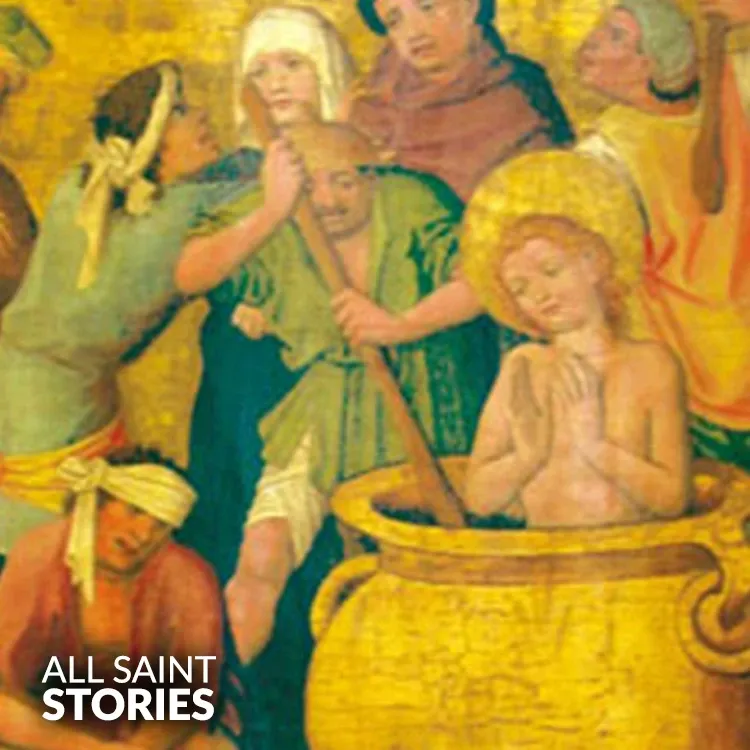 Photo: Saint Vitus, via allsaintstories.com
Remarkably, this approach worked. Within weeks of the religious intervention, the dancing epidemic began to subside. Whether through divine intervention, the power of suggestion, or simply the natural end of a mass hysteria event, the dancers gradually returned to normal.
The Mystery That Won't Die
Five centuries later, the Strasbourg dancing plague remains one of history's most fascinating medical mysteries. While we understand more about mass psychogenic illness and social contagion, the specific mechanism that could cause hundreds of people to dance themselves to death continues to elude explanation.
What we do know is that the human mind, under extreme stress, is capable of creating shared delusions so powerful they can override the body's basic survival instincts. The dancing plague of 1518 stands as a terrifying reminder that sometimes, the most dangerous epidemics aren't caused by viruses or bacteria – they're caused by the collective breaking point of human endurance.
Today, Strasbourg has largely forgotten its dancing dead, but their story serves as a haunting example of how social pressure, desperation, and mass suggestion can literally dance a society to the edge of madness.