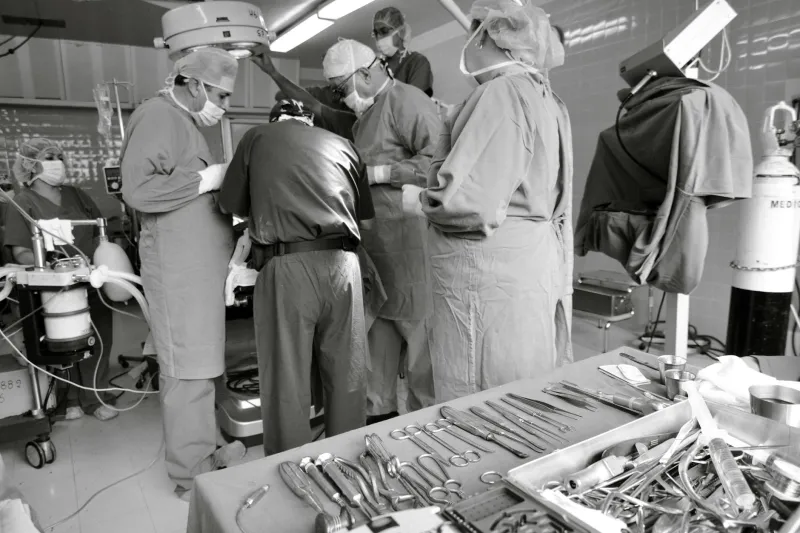
The Fastest Blade in Britain Meets Its Match
In the era before anesthesia, surgical speed meant survival. The longer a patient spent under the knife, the more likely they were to die from shock or blood loss. This harsh reality created surgical superstars—and none was more famous than Robert Liston, a Scottish surgeon whose lightning-fast amputations earned him the nickname "the fastest knife in the West End."
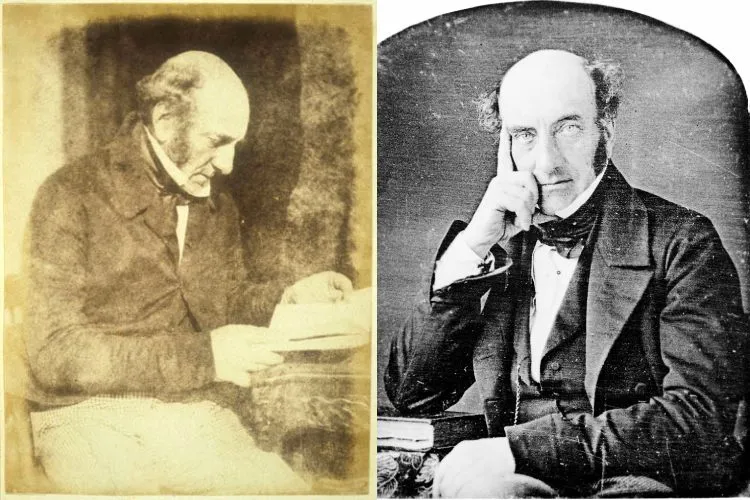 Photo: Robert Liston, via www.historyhit.com
Liston could remove a leg in two and a half minutes flat. Audiences would gather to watch him work, timing his procedures like sporting events. But on one particularly busy day in 1847 at University College London Hospital, Liston's legendary speed would create medical history for all the wrong reasons.
 Photo: University College London Hospital, via images.squarespace-cdn.com
When Confidence Meets Catastrophe
The patient was a young laborer who'd crushed his leg in a factory accident. Gangrene had set in, making amputation the only option for survival. For Liston, this was routine work—he'd performed hundreds of similar operations. What made this case different was the crowd that had gathered to watch the master at work.
Among the spectators was a prominent surgeon from Edinburgh, several medical students, and Liston's regular surgical assistant, a nervous young man who'd been working with the great surgeon for only a few weeks. The pressure was on to deliver another spectacular performance.
Liston began his work with characteristic confidence, his razor-sharp scalpel moving with practiced precision. The crowd watched in fascination as he sliced through muscle and tendon with balletic grace. Then disaster struck—not once, but three times in rapid succession.
The Cascade of Catastrophe
In his haste to set a new speed record, Liston's blade veered slightly off course. His first mistake was cutting too deeply into his assistant's hand, severing two fingers along with the patient's leg. The young man screamed and stumbled backward, blood spurting from his wounds.
But Liston wasn't finished. As he swung the scalpel in a wide arc to complete the amputation, the blade slashed across the coat of a distinguished spectator—the visiting surgeon from Edinburgh. The cut was superficial, barely breaking the skin, but the shock of being struck by a blood-covered surgical instrument in the middle of an amputation proved too much for the elderly physician.
The spectator collapsed immediately, clutching his chest. Within minutes, he was dead—not from his minor wound, but from what witnesses described as "apoplectic shock." Today, we'd probably call it a heart attack brought on by extreme stress.
The Grim Tally
Meanwhile, Liston's assistant was bleeding profusively from his severed fingers. In the chaos that followed, proper medical attention was delayed while everyone focused on the collapsed spectator. Infection set in quickly—this was decades before antiseptic practices—and within days, the assistant had developed sepsis. He died less than a week later.
As for the original patient, the one whose leg Liston had successfully removed in record time? He also developed post-operative infection and died within 48 hours. The speed that was supposed to save his life had ultimately doomed him, as Liston's hurried technique had compromised sterile procedure.
Medical History's Darkest Record
When the final tally was complete, one surgical procedure had claimed three lives: the patient, the assistant, and the spectator. It remains the only operation in recorded medical history to achieve a 300% mortality rate—a statistical impossibility that somehow became reality in the hands of Britain's most celebrated surgeon.
The incident marked the beginning of the end for Liston's career. Word spread quickly through London's medical community about the surgeon whose speed had finally betrayed him. While he continued practicing for several more years, he never again performed surgery with an audience, and his legendary confidence was noticeably shaken.
The Irony of Progress
Perhaps the most tragic aspect of this story is its timing. Just months after Liston's catastrophic surgery, ether anesthesia was introduced to British hospitals. The desperate need for surgical speed—the very thing that had made Liston famous and ultimately destroyed his reputation—was about to become obsolete.
The introduction of anesthesia meant surgeons could work slowly and carefully, dramatically reducing mortality rates and making precision more important than velocity. Liston's era of surgical showmanship was ending just as his career was imploding.
Legacy of a Cautionary Tale
Today, Liston's 300% mortality rate surgery is taught in medical schools as the ultimate cautionary tale about the dangers of surgical hubris. It's a reminder that in medicine, as in many fields, being the fastest doesn't always mean being the best.
Modern surgical procedures prioritize safety protocols, sterile technique, and careful planning over speed. What once took Liston two and a half minutes might now take two and a half hours—but the patient, assistant, and any spectators can reasonably expect to survive the experience.
The operating theater where Liston performed his infamous surgery is now a museum, complete with a plaque commemorating the day when surgical speed literally killed. It's a sobering reminder that sometimes the greatest medical advances come not from pushing the limits of human ability, but from knowing when to slow down.