The Walking Dead Man: How a Judge Refused to Resurrect Someone Who Never Actually Died
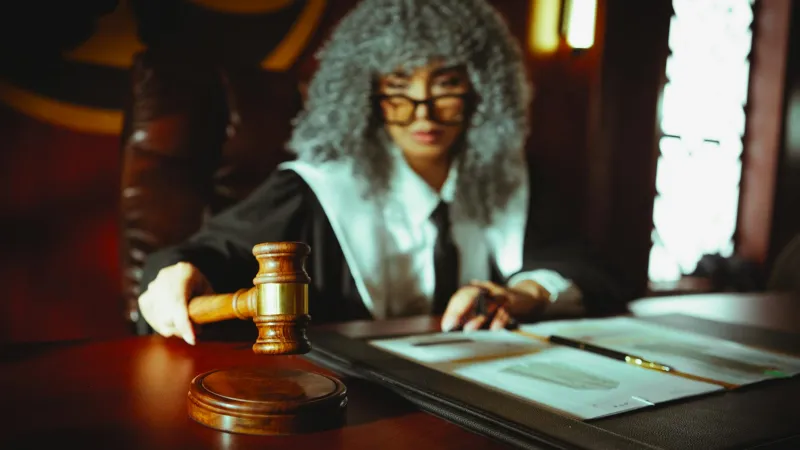
Picture this: you walk into a courtroom, shake hands with your lawyer, and politely ask a judge to confirm that you're not dead. The judge looks you up and down, sees you standing there obviously alive, and says, "Sorry, but legally speaking, you're still dead."
That's exactly what happened to Donald Miller Jr. in 2013, creating one of the most absurd legal situations in American history.
The Great Disappearing Act
The whole mess started back in 1986 when Miller, then in his early thirties, walked away from his life in Arcadia, Ohio. He left behind a wife, two kids, and a mountain of unpaid child support. For eight years, he simply vanished.
His ex-wife Robin Miller had bills to pay and children to feed. With Donald nowhere to be found and no child support payments coming in, she did what seemed logical at the time: she petitioned the court to have him declared legally dead. In 1994, an Ohio judge granted her request. As far as the state was concerned, Donald Miller Jr. had shuffled off this mortal coil.
There was just one tiny problem: Miller was very much alive, working construction jobs and living under the radar in Georgia.
The Resurrection Request
Fast-forward to 2005. Miller decided it was time to come home. Maybe he missed Ohio's charming winters, or perhaps he figured enough time had passed. Whatever his reasons, he returned to discover that legally speaking, he was a ghost.
Being dead on paper turns out to be incredibly inconvenient. Miller couldn't get a driver's license, couldn't apply for Social Security benefits, and couldn't even get a job that required a background check. Every government database showed the same thing: Donald Miller Jr., deceased as of 1994.
So in 2013, Miller did what any reasonable dead person would do—he hired a lawyer and asked a judge to bring him back to life.
"Too Late to Rise from the Dead"
Here's where the story gets truly bizarre. Miller walked into Judge Allan Davis's courtroom in Hancock County, Ohio, accompanied by his daughter and his lawyer. The evidence was overwhelming: Miller was clearly, obviously, undeniably alive. He answered questions, he moved around, he even probably had a pulse.
But Judge Davis had bad news. Ohio law sets a three-year limit for challenging a death ruling. Miller had missed that deadline by about fifteen years. The judge literally looked at a living, breathing human being and said, "The law is the law. You're still dead."
"I don't know where that leaves you, but you're still deceased as far as the law is concerned," Davis told Miller.
Living in Legal Limbo
The ruling left Miller in an impossible situation. He existed in a bureaucratic twilight zone—too alive to be buried, too dead to live normally. Social Security wouldn't reinstate his number. The DMV wouldn't issue him a license. He couldn't even qualify for food stamps because, according to the government, he didn't exist.
Miller's case highlights a surprisingly common problem. Across America, hundreds of people find themselves legally dead while very much alive. Sometimes it's due to clerical errors, sometimes it's insurance fraud gone wrong, and sometimes it's situations like Miller's—people who disappeared and were declared dead, only to resurface years later.
The Broader Zombie Problem
Miller isn't alone in this legal purgatory. The Social Security Administration's "Death Master File" incorrectly lists thousands of living Americans as deceased. Some discover the error when they're denied credit or benefits. Others find out when they try to vote and are told dead people can't cast ballots.
One woman in Michigan discovered she was legally dead when her credit cards stopped working. A man in Florida found out during a routine traffic stop when the officer's computer showed he'd died three years earlier. The officer was reportedly very confused.
The process of proving you're alive when the government insists you're dead involves mountains of paperwork, legal fees, and often years of bureaucratic battles. It's like trying to prove a negative while the negative is supposedly you.
The Aftermath
Miller's story went viral, turning him into an unlikely celebrity. Talk shows wanted interviews with the "dead man walking." Legal experts debated whether judges should have more flexibility in death declaration cases. Some states began reviewing their statutes of limitations.
But for Miller, the attention didn't solve his practical problems. He remained legally dead, stuck in administrative limbo. His case became a cautionary tale about the inflexibility of bureaucratic systems and the unintended consequences of well-meaning laws.
The Lesson in the Madness
Miller's bizarre situation reveals something profound about how we navigate the intersection of law and reality. In a world where paperwork sometimes matters more than physical presence, you can literally be standing in front of a judge and still be told you don't exist.
It's a reminder that sometimes the system designed to protect us can trap us in the most unexpected ways. And sometimes, being legally dead while physically alive is just another Tuesday in America's wonderfully weird legal landscape.
As Miller learned the hard way: in the eyes of the law, timing isn't just everything—sometimes it's the difference between existing and not existing at all.