Death, Taxes, and Orbit: The Astronaut Whose Tax Return Broke Federal Law Just by Existing
Benjamin Franklin's famous line — that nothing is certain except death and taxes — has been quoted so many times it has lost most of its punch. But Franklin, for all his genius, had a significant blind spot: he was thinking entirely in two dimensions. He never considered what happens to the certainty of taxes when you remove the taxpayer from the surface of the Earth entirely.
 Photo: Benjamin Franklin, via ohmyfacts.com
A NASA astronaut found out the hard way. And the answer, it turned out, was: nobody knows, the IRS panics quietly, and your accountant earns every dollar of his fee.
The Problem Nobody Thought to Solve
For most of American legal history, the question of where a U.S. citizen was physically located when they earned income was not particularly complicated. You were on the ground. The ground was somewhere. That somewhere was either inside the United States or outside it, and the tax code — dense, labyrinthine, occasionally maddening — had rules for both situations.
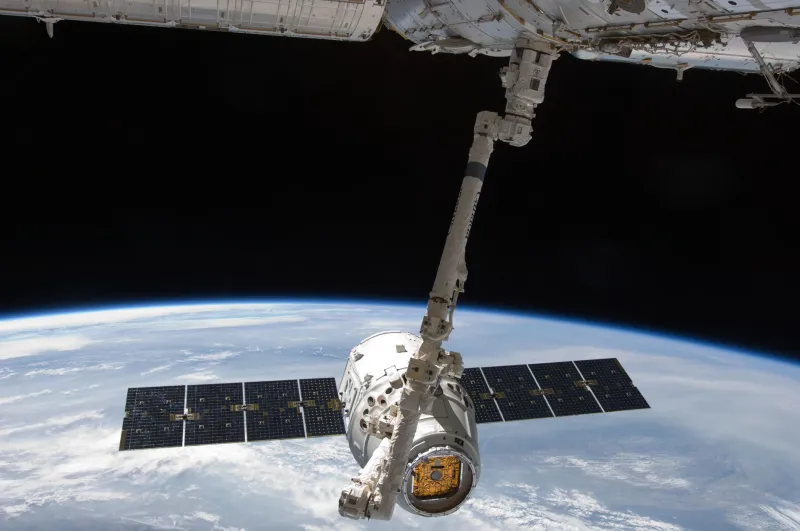
Extended space missions changed the geometry of the problem in ways that Congress had never anticipated and the IRS had never planned for. When American astronauts began spending months aboard the International Space Station in the early 2000s, they were earning their NASA salaries continuously — during experiments, during spacewalks, during the six hours a day they were theoretically supposed to be sleeping. They were American citizens. They were government employees. And they were, at any given moment, somewhere between 200 and 250 miles above the nearest tax jurisdiction.
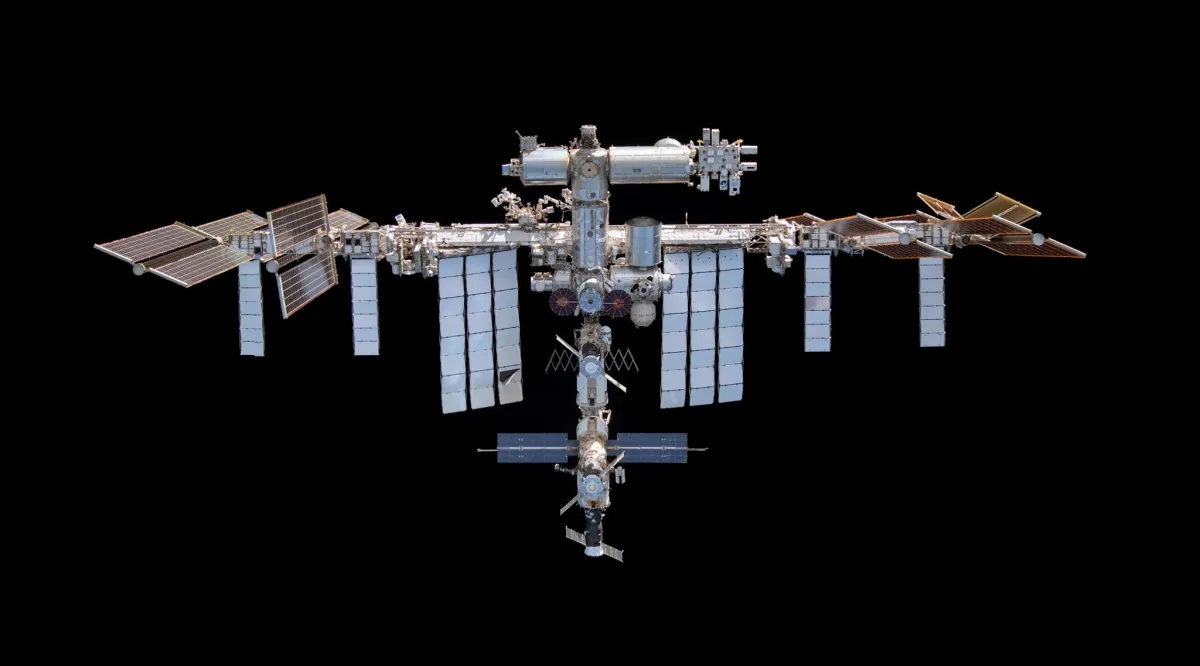 Photo: International Space Station, via cdn4.dogonews.com
The ISS orbits the Earth roughly every 90 minutes. In the course of a single workday, an astronaut passes over dozens of countries, international waters, and every time zone on the planet. The question of where, legally, that income was earned — a question with enormous implications for how it should be taxed — had a genuinely unclear answer.
The Specific Nightmare of Foreign Income Exclusion
Here is where it gets technically interesting. U.S. tax law includes a provision called the Foreign Earned Income Exclusion, which allows American citizens living and working abroad to exclude a portion of their income from federal taxation. The logic is straightforward: if you're paying taxes to another country, you shouldn't be double-taxed by the U.S. on the same money.
The exclusion has eligibility requirements. One of them is that you must be a bona fide resident of a foreign country, or physically present in a foreign country for a minimum number of days. An astronaut aboard the ISS is not a resident of any foreign country. The station itself is not sovereign territory — it exists under a complex international agreement that designates different modules as falling under the jurisdiction of their respective contributing nations, but nobody actually lives there in any legal residential sense.
So the astronaut couldn't claim the foreign income exclusion. But he also wasn't earning his income in the United States in any conventional geographic sense. He was earning it in orbit. Which the tax code, written entirely by people who had never left the atmosphere, simply did not address.
Filing an accurate return meant answering questions the forms weren't designed to ask. Answering them wrong — even accidentally — meant potential exposure to penalties for incorrect filing. The astronaut and his accountant were in the position of trying to comply with a law that had no provision for their situation, knowing that non-compliance wasn't an option but that compliance was technically impossible as written.
The Workaround That Shouldn't Have Worked
The solution, when it arrived, was elegant in the way that only truly desperate legal reasoning can be. The argument went roughly like this: the astronaut's domicile — his permanent legal home, the place he intended to return to — remained in the United States throughout the mission. His income was therefore U.S.-sourced income, earned by a U.S. domiciliary, and should be treated as ordinary domestic income for tax purposes. The fact that he happened to be in orbit while earning it was, legally speaking, incidental.
This argument is not obviously wrong. Domicile is a well-established legal concept, and courts have long recognized that a person's domicile doesn't change just because they're temporarily somewhere else. A soldier deployed overseas doesn't change his domicile. A diplomat posted abroad doesn't change hers. By extension, an astronaut in low Earth orbit shouldn't lose his domestic domicile either.
But the argument required treating the ISS as equivalent to, say, a temporary work assignment in another city — which is a conceptual stretch that would have been funny if the tax liability hadn't been real.
The IRS, to its credit, did not fight it. Whether this was because the legal reasoning was sound, because nobody at the agency wanted to be the person who prosecuted an astronaut, or because the whole situation was embarrassing enough that a quiet resolution was preferable to a public argument, the workaround held.
The Quiet Rule Changes That Followed
NASA, characteristically, responded to the episode not by celebrating a problem solved but by ensuring the problem could never recur in its current form. Working with Treasury and tax law specialists, the agency pushed for guidance clarifying how space-based income should be treated — effectively establishing that astronauts on ISS missions would be treated as earning domestic income for tax purposes, regardless of their physical location.
The guidance was not loudly announced. It appeared in the kind of regulatory communication that most Americans never encounter and wouldn't read if they did. But it closed the loophole, established a precedent, and ensured that future astronauts would have a clear answer to a question that had briefly had no answer at all.
The Larger Point
There is something genuinely humbling about the realization that American tax law — a document of almost incomprehensible complexity, revised and expanded over more than a century — simply ran out of planet before it ran out of Americans to tax. The code accounts for income earned in Antarctica. It accounts for income earned on oil rigs in international waters. It accounts for income earned by diplomats in hostile countries.
It did not account for income earned 250 miles above all of the above.
Franklin was right that taxes are certain. He just didn't account for the possibility that one day, the taxman would have to figure out how to follow us into orbit first.