The Christmas Blizzard That Made America: How Impossible Weather Handed Washington His Miracle Victory
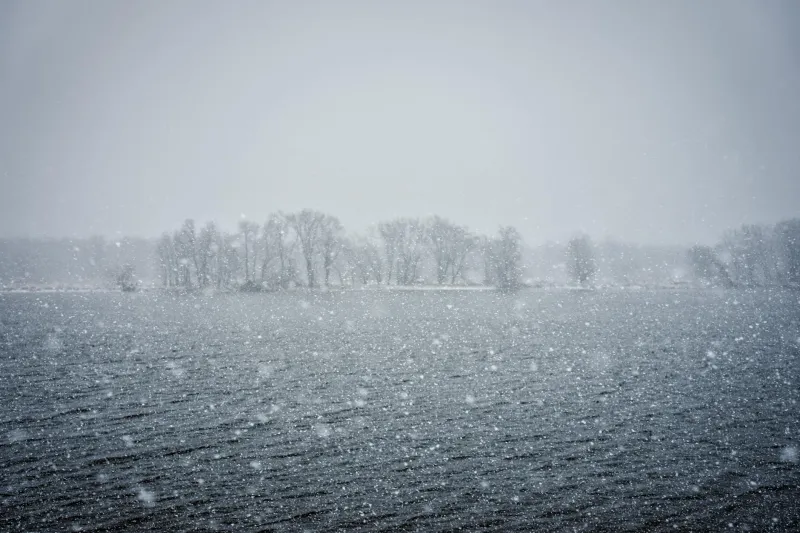
The Night Nature Decided to Pick Sides
December 25, 1776, should have been the night the American Revolution died in the Delaware River. George Washington's plan was desperate bordering on insane: ferry 2,400 Continental soldiers across an ice-choked river in the middle of winter, march nine miles through enemy territory, and attack a garrison of professional Hessian soldiers who were expecting them.
 Photo: Delaware River, via www.jposter.net
 Photo: George Washington, via i.pinimg.com
What happened instead was a meteorological miracle so improbable that if Hollywood wrote it into a movie, audiences would roll their eyes at the obvious divine intervention. Mother Nature, it seems, had very specific opinions about American independence.
When the Weather Forecast Called for Revolution
The nor'easter that hit the Mid-Atlantic on Christmas Day 1776 wasn't just any storm — it was a perfect confluence of atmospheric conditions that created exactly the right kind of chaos at exactly the right time. What started as a typical winter storm system off the Carolina coast suddenly intensified as it moved north, picking up moisture from the unusually warm Atlantic waters.
By evening, temperatures had dropped just enough to create what meteorologists now call a "mixed precipitation event" — a deadly combination of sleet, snow, and freezing rain that turned the world into a skating rink. For anyone trying to move an army, it should have been catastrophic.
Instead, it became the perfect camouflage.
The Ice That Saved America
Washington's biggest problem wasn't the storm itself — it was being seen. The Delaware River crossing point at McKonkey's Ferry was only nine miles from Trenton, well within the range of Hessian patrols. On a clear night, moving 2,400 men across open water would have been like sending up flares to announce their arrival.
But the storm created something no military planner could have predicted: a wall of precipitation so thick that visibility dropped to less than fifty yards. The sleet and snow weren't just falling — they were being driven horizontally by 30-mile-per-hour winds, creating what one soldier described as "a curtain of white that swallowed the world."
The Hessian sentries, meanwhile, were huddled in their guardhouses, unable to see beyond their own feet. Professional soldiers or not, nobody was volunteering to patrol in weather that could freeze a man solid in minutes.
The River That Couldn't Make Up Its Mind
Perhaps the strangest part of the entire operation was what the storm did to the Delaware River itself. The combination of sleet and freezing rain created a surface layer of ice just thick enough to be treacherous but not thick enough to walk on — a navigator's nightmare that should have made crossing impossible.
Except for one crucial detail: the ice chunks were the perfect size to act as natural fenders for the boats. Instead of crushing the wooden vessels, the floating ice created a buffer system that actually protected the boats from each other and from the riverbank. It was like the river had decided to help.
Colonel John Glover's Marblehead fishermen, the men responsible for getting Washington's army across, later swore they'd never seen ice behave that way before or since. "It was as if every piece knew its place," one wrote years later.
The Storm That Stopped Time
The meteorological chaos didn't just provide cover — it fundamentally altered the timeline of the entire operation. Washington had planned for the crossing to take three hours. Instead, it took nine, stretching well past the point where any reasonable commander would have called off the attack.
But here's where the storm's timing became truly bizarre: just as the last soldiers reached the New Jersey shore, the wind shifted. The horizontal sleet that had been driving directly into their faces during the crossing suddenly swung around to their backs, pushing them toward Trenton like a meteorological tailwind.
The temperature, which had been hovering right at the freezing point, dropped just enough to turn the muddy roads into a surface hard enough to march on but not so hard that it became slippery. It was as if someone had fine-tuned the weather specifically for moving an army.
When Professional Soldiers Met Amateur Weather
The Hessians in Trenton were no amateurs. These were professional soldiers from one of Europe's most disciplined military traditions, and they knew the Americans were somewhere across the river. They'd been preparing for an attack for weeks.
What they hadn't prepared for was an attack during the worst storm in recent memory. Their sentries were pulled back, their patrols cancelled, and their officers assumed — reasonably — that no army would be crazy enough to move in such conditions.
Colonel Johann Rall, the Hessian commander, had reportedly been warned about American activity across the river. But when his scouts looked out into the storm and saw nothing but white chaos, they reported back that movement was impossible. The weather had made the Americans invisible.
The Nine-Mile March Through Meteorological Madness
The march from the Delaware to Trenton reads like a survival story. Soldiers wrapped rags around their feet because their shoes had frozen solid. Muskets became useless as the firing mechanisms iced over. Men fell and couldn't get up, only to be dragged forward by their comrades.
But the storm that was trying to kill them was also protecting them. The howling wind masked the sound of 2,400 men marching through the countryside. The sleet and snow erased their tracks almost as quickly as they made them. And the sheer impossibility of the weather convinced anyone who might have seen them that they were hallucinating.
By the time Washington's army reached the outskirts of Trenton at 8 AM on December 26, they had achieved something that military theorists would have called impossible: complete tactical surprise in broad daylight.
The Storm That Changed History
The Battle of Trenton lasted less than an hour. The Hessians, caught completely off guard, surrendered almost immediately. Washington captured nearly 1,000 prisoners, seized critical supplies, and handed the Continental Army its first significant victory — all because a freak storm had made the impossible possible.
Meteorologists who have studied the weather patterns of December 25-26, 1776, still struggle to explain how so many unlikely conditions aligned so perfectly. The storm system was unusual but not unprecedented. What was unprecedented was how each element — the timing, the temperature, the wind direction, the ice formation — conspired to create exactly the conditions Washington needed.
When Nature Writes History
The Delaware crossing has become one of America's most iconic moments, immortalized in paintings and taught in every elementary school. But the role of that Christmas blizzard is usually reduced to a footnote about "harsh winter conditions."
The truth is far stranger: a meteorological accident so perfectly timed and precisely calibrated that it reads like divine intervention. Without that storm, Washington's desperate gamble would have ended in disaster, the Continental Army would have been destroyed, and the American Revolution would have died on Christmas night 1776.
Instead, a freak nor'easter decided to pick sides in a revolution, proving that sometimes the most important battles are won not by superior strategy or better soldiers, but by weather that refuses to follow the rules.