How a Poorly Written Sentence Banned an Entire Color From a New Hampshire Town for Six Years
Most great civic battles are fought over things that matter — taxes, roads, schools, the future of a community. And then there are the battles that start over something so small, so mundane, so genuinely petty that you almost can't believe grown adults with jobs and families and better things to do spent years of their lives in folding chairs at town meetings, arguing about it with the intensity of people who have nothing left to lose.
Meredith, New Hampshire spent six years arguing about blue.
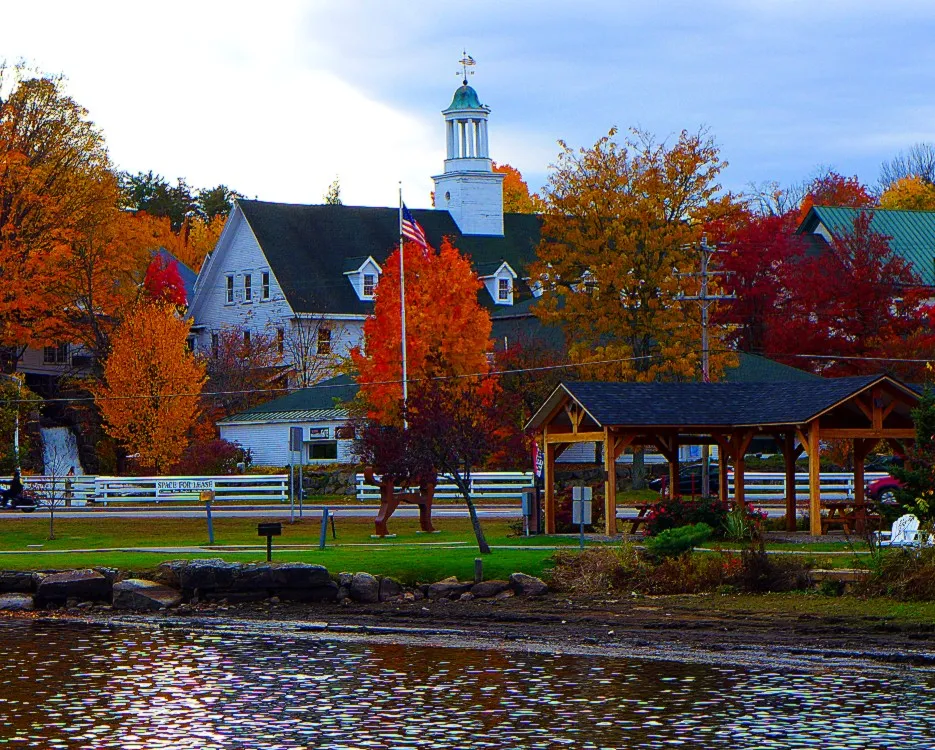 Photo: Meredith, New Hampshire, via visitingnewengland.com
Not blue in the abstract. Not blue as a metaphor. Actual blue paint, on actual building facades, in a small lakeside town in the Lakes Region where the most dramatic thing that usually happened was the summer tourist traffic backing up on Route 3.
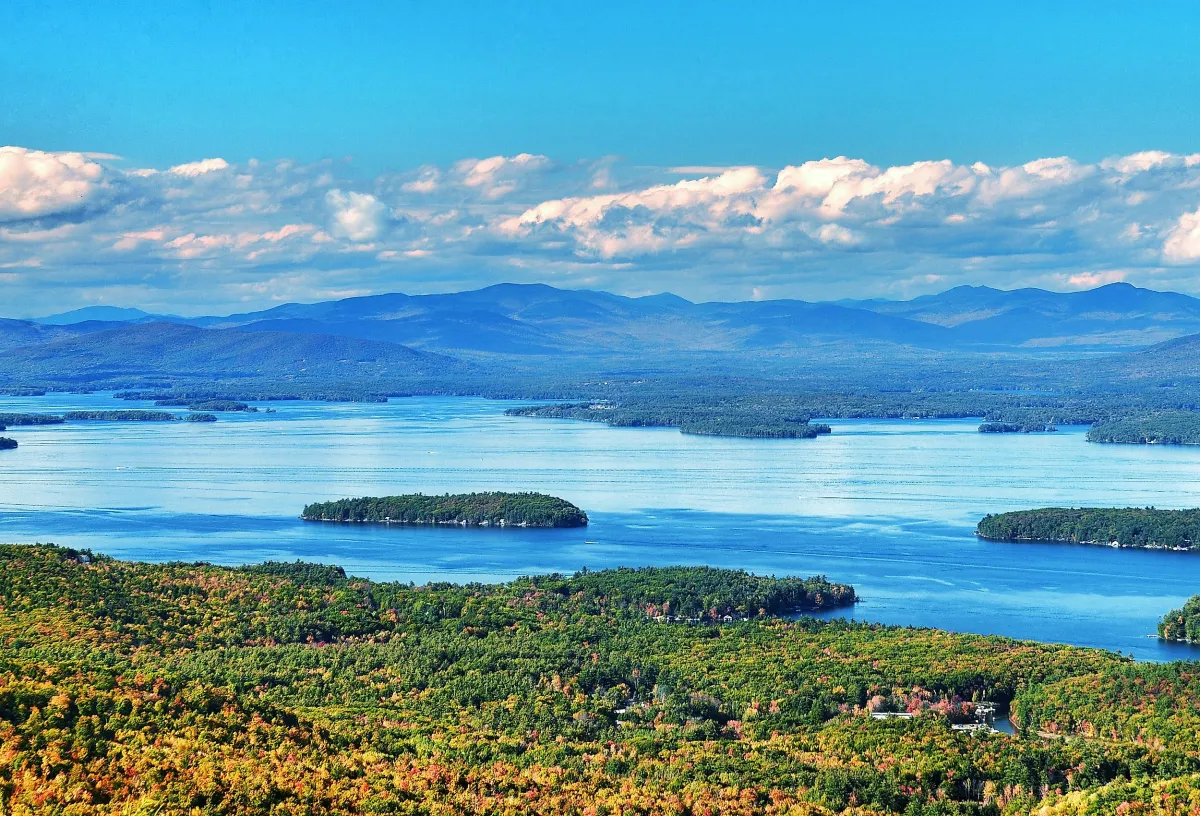 Photo: Lakes Region, via www.worldatlas.com
This actually happened. The zoning board minutes exist. The variance applications exist. At least one fistfight happened at a town meeting, though accounts differ on exactly how many punches were thrown before things were broken up.
And the local hardware store made a quiet fortune selling gray.
The Ordinance That Started It All
In the early 1980s, Meredith was going through a phase that a lot of small New England towns went through during that era: a genuine and well-intentioned effort to preserve the historic character of its downtown and lakefront areas. The old colonial and Federal-style buildings along the main commercial strip were genuinely worth protecting, and the town was watching other Lakes Region communities lose their architectural identity to vinyl siding and fast-food signage.
So the town updated its historic preservation codes. Consultants were hired. Documents were reviewed. A new ordinance was drafted specifying that buildings in the historic district had to maintain what the document called an "appropriate colonial palette" consistent with the town's 18th and 19th century architectural heritage.
This was a reasonable goal. The ordinance was not a reasonable document.
The specific language around color — and this is the part that matters — did not define "appropriate colonial palette" with any precision. It did not list approved colors. It did not provide a reference guide. It said, in language that a first-year law student would have flagged immediately, that colors should be "consistent with documented historical use in the period" and avoid "hues associated with later commercial development."
That sentence did an enormous amount of work. Most of it was the wrong kind.
The Zoning Board's Interpretation
When the new codes went into effect, the Meredith Zoning Board was tasked with enforcement. And in the way of small-town governance everywhere, the board's composition, priorities, and personalities had an enormous influence on how the rules were actually applied.
The board's interpretation of "appropriate colonial palette" was strict. Very strict. Based on their reading of historical documentation — which leaned heavily on a particular set of paint analysis studies from colonial-era New England structures — the board concluded that true colonial-period exterior colors ran primarily toward whites, creams, ochres, muted greens, and various shades of gray and brown.
Blue, in the board's view, was a problem. Not all blues — the board was not entirely unreasonable — but the kind of bright, saturated blue that showed up on storefronts and residential trim and the occasional enthusiastic porch. That blue, they argued, was more characteristic of the Victorian era and later commercial development than of genuine colonial practice.
Any resident who wanted to paint their building facade a blue that the board deemed outside the acceptable range was required to apply for a variance. The variance process cost money, took time, required documentation, and was not guaranteed to succeed.
For most people, it was easier to just not paint blue.
The Town Meeting That Got Physical
For the first couple of years, the blue situation simmered. People grumbled. A few variance applications were filed and denied. A few more were filed and approved with conditions. The hardware store on Main Street noticed that its inventory of certain blue shades was moving slowly and quietly shifted its featured displays toward a broader range of grays, which turned out to be a genuinely prescient business decision.
But by the mid-1980s, the frustration had built to the point where it needed somewhere to go. That somewhere turned out to be an annual town meeting, where a property owner who had been denied a variance for a particular shade of slate blue on his commercial building showed up with opinions.
Accounts of what happened next vary in their details but agree on the broad outline: voices were raised. A member of the zoning board suggested that the property owner lacked an understanding of historical context. The property owner suggested that the zoning board lacked an understanding of several other things, some of which were not architectural in nature. At some point, the disagreement became physical enough that the meeting had to be briefly suspended.
The local newspaper covered it. The coverage was not flattering to anyone involved.
The Resolution
The blue ordinance — which was never officially called the blue ordinance, because the town was not going to put that in writing — finally came apart in the late 1980s through a combination of legal pressure and sheer exhaustion.
A property owner who had been denied a variance retained an attorney and mounted a challenge arguing that the ordinance's language was too vague to be enforced consistently and that the board's application of it had been arbitrary. The legal argument was solid. The town's defense was not. Rather than litigate a case they were likely to lose, Meredith agreed to revise the historic preservation codes with more specific and objectively defined color guidelines.
The new guidelines included an actual approved color palette with specific paint codes. Blue was on it. Several blues, in fact — including, pointedly, a shade very close to the slate blue that had triggered the town meeting incident.
The hardware store restocked.
What Meredith Actually Teaches Us
It would be easy to treat the Meredith blue situation as pure small-town absurdity — and there is genuine absurdity here, no question. But the story is also a remarkably clean illustration of how bureaucratic language, written carelessly and interpreted rigidly, can produce outcomes that nobody intended and that everyone involved eventually regrets.
The people who wrote the ordinance wanted to protect historic architecture. That was a real and legitimate goal. The people who enforced it believed they were doing exactly that. The people who fought it weren't anti-preservation — most of them just wanted to paint their buildings a color they liked without hiring a lawyer.
One vague sentence in a zoning document turned a shared community value into a six-year dispute over paint chips.
And somewhere in Meredith, a hardware store owner who quietly pivoted to gray in 1983 probably still thinks about the whole thing with a certain quiet satisfaction.