He Dropped Out in Sixth Grade and Invented the Microwave by Accident. The First Thing He Cooked Was Popcorn.
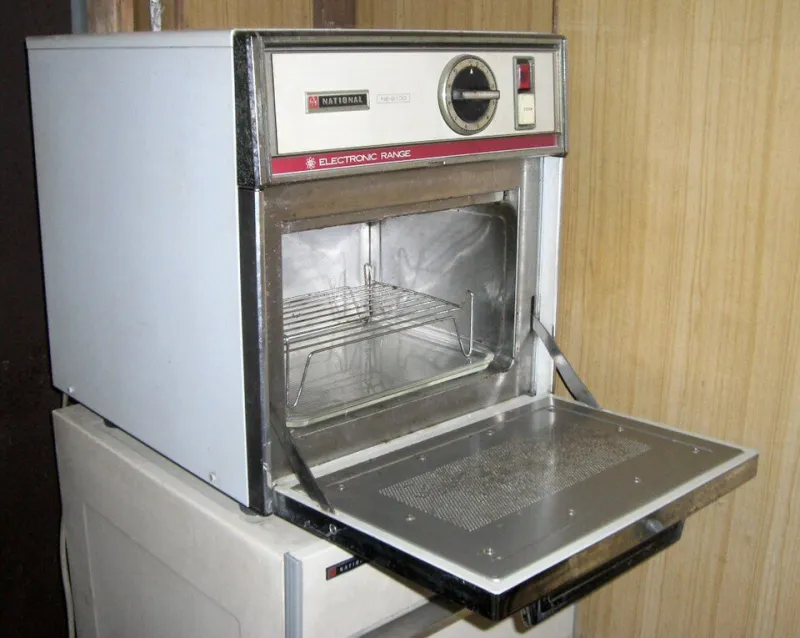
Photo: Miya.m, CC BY-SA 3.0, via Wikimedia Commons
In 1945, Percy Spencer was one of the most respected engineers at Raytheon, a defense contractor outside of Boston. He had worked on radar technology during World War II, held dozens of patents, and was considered something of a quiet genius in the field of microwave radiation. He had also never graduated from elementary school.
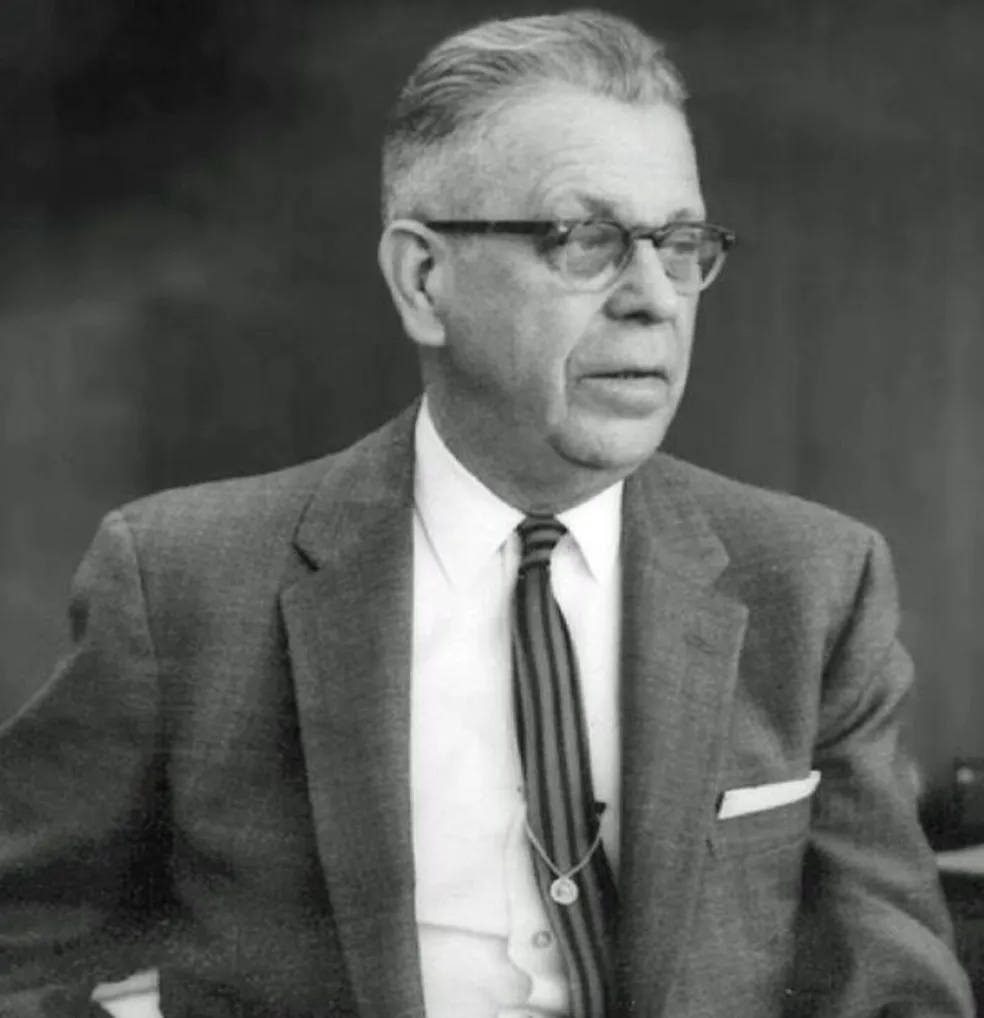 Photo: Percy Spencer, via s2-casaejardim.glbimg.com
That detail matters, because what happened next was less about formal scientific method and more about the particular kind of curiosity that doesn't know it's supposed to find something unremarkable.
The Chocolate Bar That Changed Everything
Spencer was walking past an active magnetron — a vacuum tube used to generate microwave signals for radar equipment — when he noticed something odd. The chocolate bar he had tucked into his shirt pocket had melted. Not from body heat. Not from the warmth of the room. It had turned into a soft, gooey puddle while he was standing near the machine.
A lot of people would have been annoyed. Spencer got curious.
He wasn't the first person to notice that magnetrons produced heat near food. Other engineers at various facilities had reportedly observed similar effects and largely dismissed them as a minor nuisance. Spencer, by contrast, decided to lean into the weirdness and see what happened if you pointed the thing at something deliberately.
The first thing he tried was popcorn kernels. They popped.
The Egg That Didn't End Well
Encouraged by the popcorn, Spencer and a colleague moved on to their next experiment: a whole egg. They placed it near the magnetron and waited to see what would happen.
What happened was the egg exploded.
The pressure buildup inside the shell had nowhere to go, and the egg detonated — reportedly in the face of one of the men peering in for a closer look. It was messy, it was chaotic, and by any reasonable measure it was a setback. Spencer apparently found it hilarious and filed it away as useful information.
Within months, he had built a rough prototype of what Raytheon would eventually call the Radarange — a metal box that used magnetron-generated microwaves to heat food from the inside out. The first commercial version, released in 1947, stood nearly six feet tall, weighed around 750 pounds, and cost approximately $5,000. It was marketed primarily to restaurants and industrial kitchens, because nobody in their right mind was putting a refrigerator-sized radar unit in a home.
The Dropout Who Outpaced the Textbooks
Spencer's backstory is almost as improbable as his discovery. He was born in Maine in 1894, lost his father as an infant, and was largely raised by an aunt and uncle. He left school at twelve to help support his family, working at a local spool mill. At sixteen, he taught himself enough about electricity to wire a local paper mill — a facility that had never had electrical power — without any formal training whatsoever.
He joined the Navy in his teens, became obsessed with wireless communication, and educated himself through technical manuals and sheer repetition. By the time he landed at Raytheon in the 1920s, he had built a depth of practical knowledge that colleagues with engineering degrees found genuinely difficult to match.
Over the course of his career, Spencer accumulated more than 300 patents. He received the Distinguished Public Service Award from the Navy. Raytheon eventually named him a Senior Vice President. And he did all of it without a high school diploma.
From Industrial Novelty to Kitchen Staple
The microwave oven didn't become a household object overnight. The early commercial models were enormous and expensive. It wasn't until the late 1960s and into the 1970s that smaller, cheaper countertop versions began appearing in American homes. By 1975, microwave ovens were outselling conventional gas ranges in the United States. By the 1980s, they were in the majority of American kitchens.
Today, roughly 90 percent of American households own one.
All of that traces back to a man walking past a piece of radar equipment with a chocolate bar in his pocket — and instead of shrugging it off, deciding to figure out what had just happened.
The Accident That Wasn't Really an Accident
It's tempting to tell Percy Spencer's story purely as a tale of dumb luck. The chocolate bar melted, he noticed, the microwave got invented. But that framing undersells what actually made Spencer different from everyone else who had stood near a magnetron and felt warmth.
The radar equipment that produced the effect had been around for years. Other engineers had noticed similar anomalies. The difference wasn't the accident — it was what Spencer did with it. He asked why. He experimented. He blew up an egg and called it progress.
The microwave oven didn't come from a lab with a research budget and a team of PhDs chasing a specific goal. It came from a sixth-grade dropout who had spent his entire life turning things he didn't understand into things he did.
The candy bar just gave him a starting point.