A Pickup Baseball Game in 1859 Set Off a Chain of Events That Reshaped American Politics — Nobody Noticed Until the 1940s
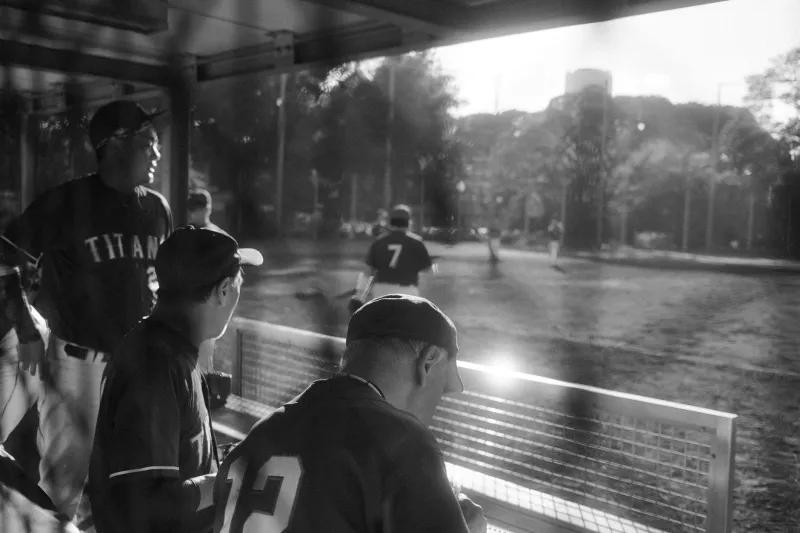
History has a habit of hiding its most important moments inside ordinary afternoons. A conversation at a party. A letter that almost wasn't written. A baseball game on a dusty Illinois field in the summer of 1859 that, for decades, nobody thought to look at twice.
The game itself was unremarkable by any sports standard. No championship was on the line. No crowd filled the stands. Abraham Lincoln — then a prairie lawyer with presidential ambitions that most people considered impractical — reportedly played a pickup game of the increasingly popular sport with colleagues and supporters in Springfield, Illinois. He was, by multiple accounts, a comically awkward player. Long-limbed, gangly, and entirely without the coordination the game required.
But what happened around that game — who showed up, what was discussed, and what decisions were quietly made in its aftermath — took nearly eight decades to fully understand.
Baseball and Politics in 1859: Closer Than You'd Think
To understand why a casual sporting event mattered, you have to understand what baseball was in 1859. It wasn't yet the national pastime in any formal sense. But it was spreading fast, and it was spreading specifically through the same social networks — young professionals, political organizers, civic clubs — that formed the backbone of party politics in mid-century America.
Games functioned as gathering events. They pulled together the kind of informal coalition-building that happened before anyone called it networking. Men who might never share a formal dinner would stand on the same field for two hours, and in doing so, build the kind of easy familiarity that translated directly into political trust.
Lincoln understood this intuitively. He was a masterful reader of social dynamics, and his willingness to participate in the game — despite his physical awkwardness — was itself a calculated act of accessibility. He was showing up. He was playing. He was, in the language of the era, one of the people.
The Conversation in the Dugout
Here's where the historical record gets interesting — and where the 80-year gap in understanding begins to close.
Researchers examining Lincoln's correspondence and the memoirs of Illinois political figures in the 1940s began to notice a pattern: several of the men who attended that 1859 game, or events surrounding it, later turned up as key figures in Lincoln's 1860 presidential campaign. The game had functioned as an informal audition — not for baseball talent, but for political loyalty and organizational ability.
Norman Judd, a prominent Illinois Republican operative who was crucial in securing Lincoln's nomination at the 1860 Republican National Convention in Chicago, was among those connected to the Springfield social circle that gathered around those summer games. The groundwork Judd laid — the delegate strategy, the convention maneuvering, the backroom commitments that delivered Lincoln the nomination over more famous rivals like William Seward — was built on relationships that had been quietly cultivated in exactly these kinds of informal settings.
Historians piecing this together in the late 1930s and 1940s described it as a revelation hiding in plain sight. The sporting culture of 1859 Springfield wasn't separate from its political culture. It was the same culture, wearing different clothes.
Why Nobody Noticed for So Long
The 80-year gap in recognition isn't hard to explain. For most of the late 19th and early 20th centuries, sports history and political history were considered entirely separate disciplines. Scholars writing about Lincoln's rise to the presidency focused on his speeches, his legal career, his published letters. Nobody was looking at pickup baseball games as a site of historical significance.
It took a generation of historians who'd grown up with a more expansive view of social history — one that took seriously the idea that important things happen in informal spaces — to go back through the record and start asking different questions. When they did, the connective tissue between Lincoln's social life and his political operation became visible in ways it hadn't been before.
This kind of retrospective historical discovery is more common than most people realize. Events that felt trivial to the people living through them — a game, a dinner, a chance meeting on a train platform — turn out to have been hinge points that redirected the flow of history. The significance isn't apparent in the moment. It only becomes visible from far enough away.
The Lesson That History Keeps Teaching
Lincoln didn't know, stepping onto that field in Springfield, that he was doing anything other than playing a game he wasn't particularly good at. The men around him didn't know they were building a presidential campaign. The afternoon felt like an afternoon.
But the relationships formed, the trust established, and the informal agreements reached around the edges of that game contributed — in ways that took historians nearly a century to untangle — to one of the most consequential political outcomes in American history.
The next time someone tells you a baseball game doesn't matter, you might want to think twice.
That actually happened.