72 Days in the Andes: The Survival Choice That Rewrote the Rulebook on Life and Death
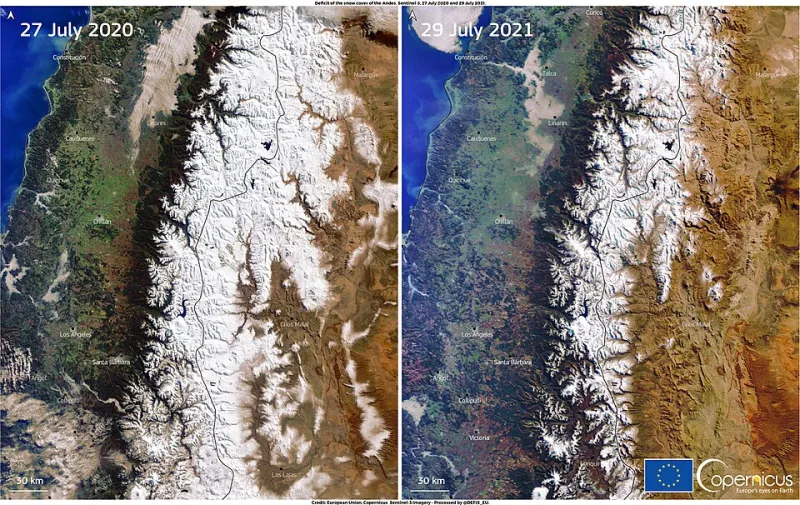
Photo: European Union, Copernicus Sentinel-3 imagery, Attribution, via Wikimedia Commons
On October 13, 1972, Uruguayan Air Force Flight 571 clipped a mountain peak in the Andes and broke apart mid-air. Forty-five people were on board — mostly members of the Old Christians Club rugby team, their families, and friends traveling to a match in Chile. Twelve died in the crash or within hours of it. The survivors, stranded at roughly 11,800 feet in one of the most inhospitable environments on Earth, were left with the wreckage of a fuselage, subzero temperatures, and almost nothing to eat.
They waited for rescue. The rescue never came. After ten days, they heard on a small transistor radio that the search had been called off.
What happened next is one of the most harrowing survival stories of the 20th century — and one of the most quietly consequential.
The Decision Nobody Wants to Talk About
The food ran out fast. A few chocolate bars, some wine, scraps of snacks. In the thin, freezing air of the high Andes, the survivors' bodies burned calories at a terrifying rate just to stay warm. Within days, they were starving.
Surrounding them, preserved perfectly by the cold, were the bodies of their friends and teammates who hadn't survived the crash.
The group debated for days. Many of the survivors were devout Catholics, and the moral and religious weight of what they were considering was enormous. But several of the survivors — particularly the older rugby players — framed it in stark terms: the dead were gone. Their bodies were here. If the living chose to use them to survive, it was not desecration. It was continuation.
Eventually, 27 survivors made the choice. They ate.
For 72 days, this kept them alive. In December, two survivors — Nando Parrado and Roberto Canessa — set out on a desperate 10-day trek through the mountains without proper gear, following a compass heading Parrado had memorized from the crash. They found help. Rescue helicopters reached the remaining survivors on December 22 and 23, 1972.
Sixteen people walked away from the Andes alive.
The Scandal That Swept the World
When the story broke internationally, the reaction was immediate and visceral. The survivors had barely landed in Santiago before rumors began circulating. When the truth was confirmed in a press conference — the survivors themselves chose to disclose it, on their own terms, before the media could frame it — the coverage was sensational.
In parts of the United States and Europe, the reaction ranged from horrified fascination to outright condemnation. Religious commentators weighed in. Talk show hosts debated it. Letters poured into newspapers.
But something interesting happened in legal and medical circles, almost beneath the noise of the public reaction. Lawyers, ethicists, and emergency medicine physicians started asking a different set of questions. Not how could they? but what does this mean?
The Legal Vacuum Nobody Had Prepared For
Here's what made the Andes case genuinely unprecedented from a legal standpoint: the survivors hadn't committed any crime that existing law could cleanly define.
In most jurisdictions in the early 1970s, laws against cannibalism were either nonexistent as standalone statutes, or folded into laws against desecration of a corpse — which typically required criminal intent and had no provisions for survival necessity. The passengers who had died hadn't been killed by the survivors. Their remains had been used, but they had not been murdered. No law enforcement agency in Uruguay, Chile, or Argentina seriously pursued charges.
But the case exposed a yawning gap. What exactly were the legal and ethical boundaries of survival necessity? If a person consumes a deceased individual's remains to survive, with no other option available, is that a crime? Should it be? Does the deceased's prior consent matter? What about the rights and wishes of their families?
These weren't abstract philosophy questions anymore. Sixteen living people had just made them very, very real.
The Quiet Revolution in Emergency Ethics
Over the years following the rescue, the Andes case became required reading — sometimes literally — in medical ethics courses, law school seminars, and emergency preparedness training programs across the United States and beyond.
The story forced a structured conversation about what ethicists call necessity doctrine: the principle that an action normally considered wrong may be legally and morally permissible if it is the only available means of preventing a greater harm. Courts in the U.S. had applied necessity doctrine in various contexts, but the Andes case pushed medical ethicists to apply it explicitly to bodily autonomy, consent after death, and the rights of survivors in extreme circumstances.
It also influenced the development of more nuanced frameworks around advance directives and postmortem consent — the idea that individuals should be able to specify, while living, how their remains may or may not be used in extreme circumstances. The conversations happening in hospitals and law schools today about what a person's body can or cannot be used for after death owe at least a partial debt to what happened on that mountain.
Perhaps most significantly, the case became a touchstone for discussions about the psychology of moral decision-making under extreme duress — a subject that would go on to inform military survival training, disaster response protocols, and crisis counseling methodology in the United States and internationally.
What the Survivors Said
Many of the sixteen survivors have spoken publicly over the decades, and their accounts are striking for their lack of sensationalism. Nando Parrado, who became one of the most prominent voices from the group, has consistently described the decision as a straightforward act of love — that the dead, who were their friends, gave the living the means to survive, and that honoring that gift meant living fully afterward.
That framing — survival as an act of loyalty to the dead rather than a violation of them — is itself a remarkable piece of moral reasoning that ethicists have found genuinely useful when thinking about extreme circumstances.
Sixteen people came down from the Andes. They brought with them not just their survival, but a set of questions that medicine, law, and ethics are still working through more than fifty years later. The mountain took a great deal from them. What they left behind, it turns out, was more than anyone expected.